Hey there! As a PVC suction hose supplier, I often get asked a bunch of questions about the products we offer. One question that pops up quite a bit is, "Are PVC suction hoses resistant to solvents?" Well, let’s dive right into this topic and break it down. PVC Suction Hose
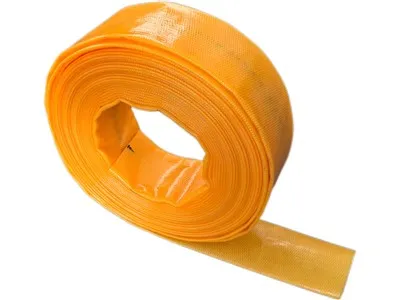
First off, let’s understand what PVC suction hoses are. PVC, or polyvinyl chloride, is a type of plastic that’s widely used in making all sorts of things, and suction hoses are one of them. These hoses are super handy in a lot of industries. You can find them in agriculture for watering crops, in manufacturing plants for moving fluids around, and even in household cleaning equipment.
Now, when it comes to solvent resistance, it ain’t as straightforward as you might think. Different solvents have different chemical properties, and PVC hoses react to them in different ways. Some solvents can be pretty harsh on PVC, while others might not cause too much trouble.
Let’s start with the solvents that can be a real pain for PVC suction hoses. There are certain types of organic solvents, like ketones and esters, that can really mess with PVC. Ketones, such as acetone, are known for their strong dissolving power. When PVC suction hoses come into contact with acetone, the acetone can start to break down the chemical bonds in the PVC material. This leads to swelling, softening, and eventually weakening of the hose. Over time, the hose can lose its shape, and its structural integrity goes downhill fast. The same goes for esters. Esters are often used in paints, coatings, and adhesives, and they can have a similar effect on PVC. If you’re using a PVC suction hose to transfer a solvent that contains a high concentration of ketones or esters, you’re likely to run into problems before too long.
On the other hand, there are some solvents that PVC suction hoses can handle a bit better. Alcohols, for example, usually don’t cause as much damage to PVC as ketones and esters. Of course, the type of alcohol matters too. For instance, ethanol, which is the alcohol in alcoholic drinks and is also used in some cleaning products, typically has a milder effect on PVC. But if you’re dealing with isopropyl alcohol, which is a stronger alcohol commonly used as a disinfectant, it can still cause some swelling and degradation of the PVC over time, especially if the exposure is prolonged.
Another factor that affects how well PVC suction hoses resist solvents is the temperature. Higher temperatures can make solvents interact with PVC more aggressively. When it’s hot, the molecules in the solvent move around more vigorously, and they’re more likely to penetrate the PVC material. So, if you’re using a PVC suction hose in a hot environment while transferring solvents, the hose is going to be under more stress and might deteriorate faster.
The thickness of the PVC hose also plays a role. Thicker hoses generally have better resistance to solvents compared to thinner ones. A thicker wall provides more material to withstand the attack of solvents. It acts as an extra layer of protection, so it takes longer for the solvent to penetrate and cause damage.
But here’s the good news. At our place, we’ve been working hard to improve the solvent resistance of our PVC suction hoses. We’ve developed special formulations of PVC that are more resistant to certain solvents. These new formulations use additives that help to strengthen the chemical structure of the PVC, making it less likely to break down when it comes into contact with solvents. For example, we’ve added some reinforcers that create a sort of barrier within the PVC material. This barrier makes it harder for solvents to penetrate and disrupt the chemical bonds.
We also offer hoses with different levels of solvent resistance to meet the needs of different customers. If you’re just dealing with mild solvents in a low – risk environment, our standard PVC suction hoses might be just fine. But if you’re working with more aggressive solvents or in a high – temperature environment, we have heavy – duty hoses that are specifically designed to handle the tough stuff.
When you’re choosing a PVC suction hose for a solvent – related application, there are a few things you should keep in mind. First, you need to know exactly what kind of solvent you’ll be dealing with. Check the chemical composition of the solvent and do a bit of research on how it reacts with PVC. You can also ask us for advice. We’ve got a team of experts who can look at your specific situation and recommend the best hose for you.
Second, think about the conditions in which the hose will be used. Consider the temperature, the pressure, and how long the hose will be in contact with the solvent. All these factors will affect the performance and lifespan of the hose.
Finally, don’t forget about maintenance. Even if you have a high – quality, solvent – resistant PVC suction hose, proper maintenance is key. Make sure to clean the hose regularly after use to remove any residual solvent. Store the hose in a cool, dry place when it’s not in use to prevent any unnecessary degradation.
In conclusion, PVC suction hoses can have varying levels of resistance to solvents. It depends on the type of solvent, the temperature, the thickness of the hose, and the specific formulation of the PVC. But with the right knowledge and the right product, you can find a PVC suction hose that will work well for your solvent – transfer needs.
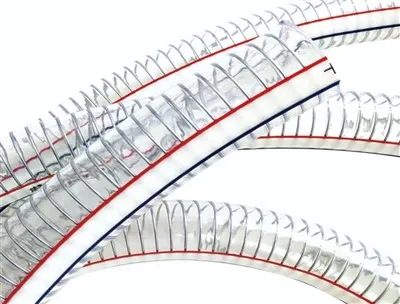
If you’re in the market for a PVC suction hose and need help choosing one that’s suitable for your solvent application, don’t hesitate to reach out. We’re here to offer you the best advice and the highest – quality products. Let’s have a chat and see how we can meet your requirements.
PVC Suction Pipe References
- "Polyvinyl Chloride (PVC) Handbook" by Charles A. Daniels
- "Solvent – Polymer Interactions" by Robert F. Boyer
Weifang Xinzhiyuan Plastic Co., Ltd.
As one of the most experienced pvc suction hose manufacturers and suppliers in China, we offer a wide range of products with superior quality. Please feel free to wholesale premium pvc suction hose made in China here from our factory. We also accept customized orders.
Address: No. 700, Tongle Street, Economic Development Zone, Changle County, Weifang City, Shandong Province
E-mail: hua@xzypvchose.com
WebSite: https://www.pvchose-xzy.com/
