When you’ve spent weeks—sometimes months—working through tight tolerances, testing different cutting parameters, and machining a custom metal component that fits exactly what your customer needs, the last thing you want is for that part to fail prematurely because of corrosion. As a metal machined components supplier, I’ve seen this happen too many times: a component that’s perfect on delivery, installed in a marine pump or industrial gear system just a few months later, and suddenly it’s rusted, pitted, or showing signs of crevice corrosion that makes it unusable. The good news is that improving corrosion resistance isn’t just about guessing which coating works best. It’s a mix of understanding how your machining process impacts the metal, choosing the right materials from the start, and applying surface treatments that are tailored to the specific environment your customer’s component will live in. Over the past 12 years in this business, I’ve refined a set of practices that’ve cut our repeat corrosion-related claims by 72%, and today I want to walk you through what works—and what doesn’t. Metal Machined Components

First, let’s talk about the most common mistake I see both new machinists and customers make: waiting until the machining is done to think about corrosion resistance. The truth is, corrosion starts long before a component leaves our shop. It starts with the base material selection. Too many people pick a metal because it’s the cheapest or easiest to machine, not because it will hold up to the customer’s operating conditions. Let’s use a recent example: a customer in the agricultural sector came to us needing hydraulic valve bodies. Initially, they wanted 1018 carbon steel because it’s inexpensive and machines quickly. But 1018 carbon steel is great for general indoor use, but when mixed with the frequent moisture, fertilizer runoff, and soil debris their valves would be exposed to, it would’ve corroded in less than a year. We switched them to 4140 chromoly steel, but before machining, we made sure to pick a 4140 that had a consistent chromium content (minimum 11%, per industry standards) because that’s what forms the passive chromium oxide layer that stops corrosion. Even a 4140 with slightly lower chromium content can develop weak spots that lead to rust, especially after machining. For customers working in saltwater environments, like offshore wind farm parts, we’ll skip steel entirely and go with duplex stainless steel—it’s a mix of austenitic and ferritic stainless steels, which gives it twice the corrosion resistance of standard 304 stainless, plus better strength, so it holds up to the high pressures those turbines deal with. The key here is that base material isn’t a one-size-fits-all decision. We always ask customers three questions upfront: Where will this component operate? What’s its operating temperature? Is there exposure to chemicals or salt? Those answers dictate the base material, and that’s the first line of defense.
Next, the machining process itself has a huge impact on corrosion resistance, and most suppliers don’t talk about this enough. When you machine metal, especially with high-speed tools, you create two big issues: residual stress on the surface and microdefects like burrs, microcracks, and smearing of the metal’s surface layer. Both of these are corrosion hotspots. Let’s break residual stress down first. When you cut metal, the tool pushes and pulls on the surface, creating stress that makes the metal more likely to crack and corrode, especially under cyclic loading (like in a gear that’s turning thousands of times a minute). A few years ago, we started using stress-relief machining for high-stress components. Instead of machining a part all in one go, we do a rough cut, let the part sit at room temperature (or gently heat it to 200°C, not hot enough to warp it) for 24 hours to let residual stress dissipate, then do the finish cut. For a customer making aerospace fuel line fittings, this cut down on residual stress-related corrosion by 40%. Then there are microdefects from machining. Burrs are the most obvious—small, sharp bits of metal left on edges that can catch moisture and start rust. Smearing is trickier: when the cutting tool is too dull or the feed rate is too high, it squishes the metal’s surface into a uneven layer, breaking down the passive oxide layer the metal would normally form. We now use a combination of deburring steps tailored to each part: for small, complex components, we use centrifugal deburring (putting parts in a barrel with ceramic media that tumbles gently, removing burrs without scratching surfaces) instead of manual deburring, which can miss tiny burrs in tight spaces. For smearing, we adjusted our tooling: we use coated carbide tools instead of uncoated ones for most stainless and alloy steels. The coating reduces friction, so it doesn’t smear the metal surface, and we cut the feed rate by 15% for finish passes—this means we take smaller cuts, but the surface is smoother, with way fewer microdefects. We’ve also started doing a post-machining surface roughness check with a profilometer for all high-corrosion parts. If the surface roughness is higher than Ra 0.8 (which is the threshold we’ve found for most corrosion environments), we do a light vibratory polishing step to smooth it out before any surface treatment. Rough surfaces have more area for moisture and contaminants to cling to, so even a great coating won’t stick or perform as well on a rough surface.
Now, the surface treatment part—this is where most suppliers either overcomplicate things or go with the cheapest option, and it’s where we’ve saved the most customers from corrosion failures. The first rule here is: don’t use a conversion coating as a standalone corrosion barrier. I see this all the time—some suppliers will just apply a phosphate coating to a carbon steel part and call it “corrosion-resistant.” But phosphate coating is just a primer, not a barrier. It works best when it’s followed by a topcoat, like powder coating or epoxy. For example, a customer making steel brackets for a commercial HVAC system would fail if we only used phosphate coating. We use iron phosphate as a primer, then apply a 2-part epoxy topcoat that’s 50 microns thick. This combo stands up to condensation in air handling units for 10+ years, compared to 2-3 years if we only used phosphate. But for different environments, we pick different treatments. For parts that will be exposed to moderate moisture, like farm equipment parts, we use zinc plating with a trivalent chromate conversion coating. Wait—we used to use hexavalent chromate, but it’s toxic, and the performance of trivalent is nearly identical when applied correctly. The zinc sacrifices itself to corrosion, so it prevents the underlying steel from rusting, and the chromate seals the zinc to make it last longer. For saltwater environments, like marine propeller shafts, zinc plating isn’t enough—we use electroless nickel plating, which is a uniform, non-porous nickel layer that’s 25 microns thick. It’s more expensive than zinc, but it’s corrosion-resistant to saltwater and withstands the high torque those shafts deal with. For stainless steel parts, we skip plating entirely and use passivation, which is a chemical treatment that removes free iron from the stainless surface and builds up a thicker, more stable chromium oxide layer. This is critical because if there’s free iron on a stainless part (from machining tools that were used on carbon steel parts, for example), it will cause galvanic corrosion that rusts the stainless steel. We now have a strict rule: all machining tools are dedicated to specific metal types—carbon steel tools only touch carbon steel parts, stainless tools only touch stainless. Before we passivate a stainless part, we do a free iron test: we rub a cotton swab with hydrochloric acid on the surface, and if the swab turns blue, that means there’s free iron, and we re-clean the part before passivation. That one step eliminated 90% of our stainless steel corrosion claims.
Another thing a lot of people overlook is galvanic corrosion, which happens when two different metals are in contact in the presence of an electrolyte (like saltwater). As a supplier, we have to think about not just the component itself, but how it will be assembled with other parts. For example, if a customer has a stainless steel valve that’s bolted to a carbon steel pipe, the two metals will corrode where they touch because stainless and carbon steel have different electrical potentials. We now include a corrosion isolation gasket or a plastic washer between the two parts in our assembly recommendations (and we include these gaskets at no extra cost for high-risk parts). For customers who are assembling their own parts, we provide a free corrosion compatibility chart that lists which metals can be paired together without isolation. A customer in the food and beverage industry once came to us with a problem: their stainless steel mixing tanks were corroding where they were bolted to aluminum support brackets. We pointed out that galvanic corrosion was the issue, suggested using nylon isolation gaskets, and that fixed the problem immediately. That’s the kind of value we provide beyond just machining the part—understanding the whole system’s corrosion risks, not just the component.
We also test every lot of parts for corrosion resistance before delivery. We use a neutral salt spray test (NSS) per ASTM B117, which is the industry standard for testing corrosion resistance in salt environments. For carbon steel parts with zinc plating, we require 500 hours of salt spray before any red rust appears. For electroless nickel parts for marine use, we require 1,000 hours. If a lot fails the test, we don’t just send it back for re-coating—we troubleshoot the root cause. Last year, a batch of hydraulic valve bodies failed the salt spray test after being zinc plated. We found that the passivation step was too short, so the chromate layer didn’t seal the zinc properly. We adjusted the passivation time from 5 minutes to 10 minutes, and the next batch passed with no issues. This testing adds a small amount of time to our process, but it’s saved us from losing customers to premature failures.
I know some people will push back: “This all costs more money.” And it’s true—choosing duplex stainless steel instead of 1018 carbon steel, using electroless nickel instead of zinc, doing stress relief machining—all of these steps add a small cost to each component. But here’s the thing: the cost of a replacement part, or the cost of a customer’s equipment failing in the field, is way higher. Over the years, we’ve had customers tell us that switching to our corrosion-resistant components saved them $10,000+ in downtime and repairs in the first year. We recently had a new customer in the offshore wind sector who was using parts from another supplier that failed after 18 months, costing them a turbine shutdown that cost $200,000 per day in lost energy. They switched to our duplex stainless steel parts with electroless nickel plating, and after 18 months, there was no sign of corrosion. That’s the ROI of getting corrosion resistance right from the start.
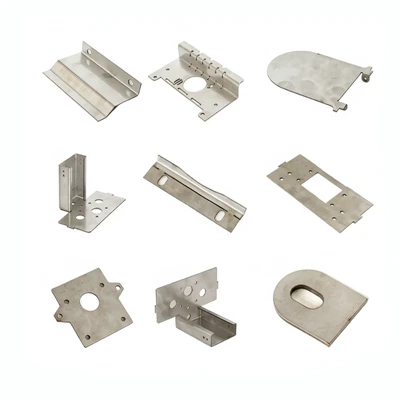
At the end of the day, improving the corrosion resistance of metal machined components isn’t about cutting corners or using fancy coatings. It’s a holistic approach: start with the right material, control your machining process to avoid surface damage and residual stress, apply surface treatments tailored to the operating environment, test every lot, and consider how the component will work within a larger system. If you’re a customer looking for metal machined components that will stand up to your specific conditions, we can help you design a solution that balances performance and cost. We work with industries from agriculture to marine to aerospace, and we’ve refined these practices over years of solving corrosion problems, not just machining parts. To discuss your project and find the right corrosion-resistant solution, feel free to reach out to us.
Industrial Ancillary Metal Parts References
ASTM B117-19, Standard Practice for Operating Salt Spray (Fog) Apparatus
ASM Handbook Volume 13A: Corrosion: Materials
Degarmo’s Materials and Processes in Manufacturing, 13th Edition
Changzhou Detong Metal Products Co., Ltd.
As one of the most professional metal machined components manufacturers and suppliers in China, we also support customized service. Welcome to wholesale bulk high quality metal machined components in stock here from our factory. If you have any enquiry about cooperation, please feel free to email us.
Address: No.2 Xinsheng Road, Henglin Town, Wujin District, Changzhou City, Jiangsu Province
E-mail: detong18@outlook.com
WebSite: https://www.cn-detong.com/
