If you’ve ever worked on a piping project, you know the right fittings make or break the whole system—especially PE steel transition fittings. I’m a supplier of these things, and over the years, I’ve heard every mistake contractors make when ordering too many (wasting cash) or too few (hurry-up reorders mid-project, ugh). Today, I’m breaking down how to calculate exactly how many you’ll need, no guesswork required. Let’s keep it real, no stuffy jargon, just what actually works on the job. PE Steel Transition Fittings
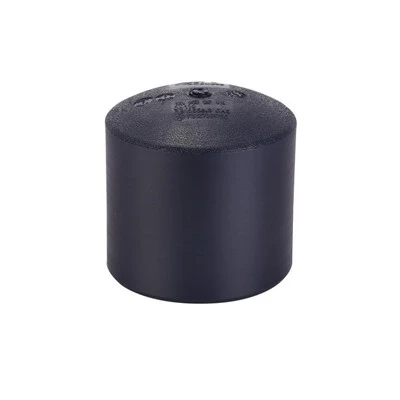
First, let’s get clear on what PE steel transition fittings are, because if you’re ordering the wrong ones, your math’s gonna be off. These are the connectors that link polyethylene (PE) plastic pipe to steel pipe—super common because PE’s cheap, corrosion-resistant, and steel’s tough for high pressure. You can’t just glue or weld them straight; you need these transition pieces. They come in different types: socket fusion (for small PE pipe sizes), mechanical (good for quick installs, can take apart later), and butt fusion (for larger pipes, big jobs like municipal water lines). Your pipe size, pressure rating, and the environment will pick which type you need, so lock that in first before counting fittings. No sense calculating how many socket transitions you need if your project needs butt fusion—wasted time, wasted inventory.
Next, start with your piping layout. This isn’t just drawing lines on a blueprint; it’s walking the job site (or at least breaking down every section of the layout like you would on-site). Let’s talk about the basics: every time a PE section meets a steel section, you need at least one transition. That seems simple, but here’s where people mess up: when there’s a tee, a elbow, a flange, or a reducer, you might need more than one. Let’s say you’re running a line that goes 200 feet of PE, then turns 90 degrees with a steel elbow, then connects to a steel tank. The PE meets the elbow (1 transition) and the elbow meets the tank (another transition)—so that’s two, not one. Wait, no, the elbow itself is steel, so the PE to elbow is one, elbow to tank is another. That’s two right there. If you add a branch line, say a small PE line tapping off the main steel line, that’s a third transition. Every intersection between the two pipe materials is a number to log.
Pro tip: Grab a highlighter, mark every spot on your layout where PE ends and steel starts. Then, for each of those spots, note if it’s a straight run, elbow, tee, or flange—because that’s how you match the right fitting type. I once had a contractor who marked 12 transition spots, but didn’t notice two of them were tees, each needing two transitions, so he ordered 12 instead of 14. He had to wait three days for a reorder, which cost him labor fees. Don’t be that guy.
Now, factor in pipe size variation. This is a big one I see all the time. PE pipe comes in nominal sizes (like 4-inch, 6-inch) and so does steel, but they’re not exactly the same internal or external diameter. Wait, external diameter is what matters here for fittings. For example, a 4-inch PE pipe has an external diameter of around 110mm, while a 4-inch Schedule 40 steel pipe has an external diameter of about 114mm. So if you’re moving from a smaller PE pipe to a larger steel pipe (or vice versa), you can’t use a straight transition—you need a reducer transition. That adds to your count. Let’s say your main line is 6-inch PE, then it connects to a 6-inch steel flange (that’s one), then a branch line is 4-inch PE connecting to a 4-inch steel valve (that’s another), but if the valve is 5-inch steel? Wait, no, real sizes: let’s make it concrete. If your layout has a spot where 8-inch PE meets 8-inch steel (straight transition), and another where 6-inch PE meets 8-inch steel (reducer transition), those are two distinct counts, not one. I can’t tell you how many contractors mix up these sizes and order wrong fittings. Double-check every PE and steel size at each transition spot, because mismatched sizes mean extra (or wrong) fittings.
Then, add in accessories and contingency. No job goes 100% to plan. You might have a last-minute valve add-on, a damaged fitting during delivery, or a change in the layout that you didn’t account for. Here’s the rule of thumb I use: add 5% for small residential or commercial jobs, 10% for municipal or industrial jobs. Wait, why? Industrial jobs have more moving parts, more pipe runs, more fittings that can get banged up on-site. Let’s do a quick example: if your math says you need 20 transitions, 5% is 1 more, so 21. If you’re on a 100-transition industrial job, 10% is 10 more, so 110. But don’t go overboard—some contractors add 20% just to be safe, but that’s money sitting in inventory that might never get used. 5-10% is sweet spot, I’ve tested it thousands of times.
Wait, also, don’t forget coupling and end caps? No, end caps are for closing off pipe ends, transitions are only PE to steel. But sometimes people confuse them—don’t do that. Another thing: mechanical transitions need gaskets, right? Some suppliers include gaskets with the fitting, some don’t. When you’re counting, if gaskets are separate, count them too. I’ve had a contractor order 100 mechanical transitions, then realize he needed 100 gaskets too—another reorder, another delay. So when you’re calculating, make a note of every component that goes with the fitting, not just the fitting itself.
Let’s walk through a real example to make this easy. Suppose you’re doing a small commercial project: a 3-inch PE line runs from a water tank to a shop, then turns 90 degrees into a steel pipe going to a sprinkler system. Layout breakdown:
- PE line connects to the steel tank outlet: 1 straight transition (3-inch PE to 3-inch steel)
- PE line turns 90 degrees, connects to a steel elbow: 1 transition (3-inch PE to 3-inch steel elbow)
- The elbow connects to another steel pipe going to a valve: wait, no— that elbow is steel, so the PE to elbow is the second transition. Wait, let’s correct that example to be accurate: Project: Café water line, PE pipe (3-inch SDR 11) runs 50 feet from a municipal tap, then connects to steel pipe (3-inch Schedule 40) that goes to a water heater and a hose bib. Breakdown of transition spots:
- PE pipe (3-inch) meets steel tap (3-inch): 1 transition
- Steel pipe (3-inch) splits into a tee for the water heater (3-inch steel) and a tee for the hose bib (3-inch steel): both steel, so no transitions here
- Wait, no— the PE only meets steel twice: start at the tap, and when the line is done? No, the PE is only for the first 50 feet, so the only transition is 1? No, wait, no— the municipal tap is steel, so you need a PE to steel transition there. The rest is all steel, so that’s 1. Then add 5% contingency: 0.05, so 0.05 rounded up to 1, total 2. That makes sense, right? Last year, a café contractor did this exact project, counted only 1, didn’t add contingency, and the plumber dropped the only fitting, cracked it, so he had to wait a day for a reorder. Adding that 5% would’ve saved him a headache.
Another example: a small industrial line. 6-inch PE SDR 17 runs 200 feet, connects to 6-inch steel pipe that has a 6-inch tee for a chemical feed line, then a 6-inch steel valve, then connects to a processing tank. Transition spots: 1 (PE to steel start), 1 (steel tee branch line: PE branch? No, wait, chemical feed is steel, so that’s steel to steel. Wait, let’s adjust: chemical feed line is 4-inch PE, so 4-inch PE tee branches off 6-inch steel main. That’s a transition: 2 (PE main to steel main) + 1 (PE branch to steel tee) = 3 transitions. Add 10% contingency: 0.3, rounded up to 1, total 4. That’s right.
Now, common mistakes to avoid, because I see these every single week. First, not checking the piping spec sheet. A contractor once ordered 6-inch socket transitions, but his pipe was SDR 11, which needs butt fusion transitions— socket is for smaller SDR sizes. Wrong type, wrong count, wasted money. Second, forgetting reduced-size transitions. If your PE pipe is a different size than the steel at a joint, you can’t use a straight fitting. Third, no contingency. I can’t stress this enough— on a job, something breaks, something gets wrong, something gets skipped. Don’t learn the hard way. Fourth, counting all transitions, no matter how small. That tiny hose bib line with a PE to steel connection counts as one, not zero.
Now, once you’ve crunched the numbers, reach out to us. We’re the PE steel transition fittings suppliers who actually know what we’re talking about— no B.S., no upcharging for no reason. We can verify your calculations, make sure you ordered the right fitting type, size, and all the accessories you need. Whether it’s a small café job or a big municipal project, we’ve got the fittings in stock to get you on schedule.
Before you go, here are a few quick notes to recap: 1. Confirm your fitting type (socket, mechanical, butt fusion) matches your pipe specs. 2. Mark every PE-to-steel spot on your layout. 3. Double-check pipe sizes for each joint, add reducers if needed. 4. Add 5% (small jobs) or 10% (big jobs) for contingency.
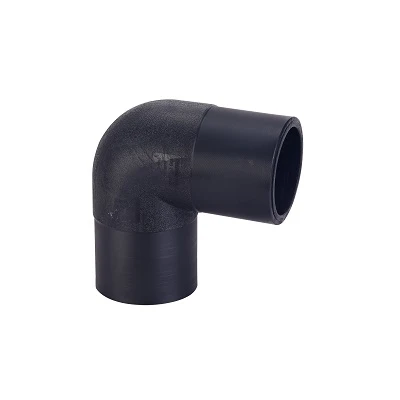
If you need help verifying your count, want a quote, or have questions about which fittings work for your project, get in touch with our team to chat procurement. We’re here to make this easy, no confusion, no delays.
PE Buttfusion Fittings References
- Plastics Pipe Institute. (2022). Transition Fitting Selection Guide for PE and Steel Piping Systems.
- American Society of Mechanical Engineers. (2021). Standard for Transition Joints Between Thermoplastic and Metallic Piping.
- National Plumbing Manufacturers Association. (2023). Installation Best Practices for PE-Steel Transition Fittings.
Zhejiang Shengbo Pipe Fittings & Valves Industry Co., Ltd.
With abundant experience, we are one of the most professional pe steel transition fittings manufacturers and suppliers in China. Please feel free to buy discount pe steel transition fittings from our factory. Welcome to contact us for quotation and free sample.
Address: No. 79 Hemudu North Road, Hemudu Town, Yuyao City, Ningbo City, Zhejiang Province, China
E-mail: shengbo@zj-shengbo.com
WebSite: https://www.shengbofitting.com/
