Hey everyone, Aluminium Smart Doors

If you’re like most property owners or managers, when you’re upgrading your entry doors, security is probably top of your list. I run an Aluminium Smart Doors supply business, and I can’t tell you how often people reach out asking, “Aluminium vs steel— which is actually more secure?” It’s a fair question! A lot of folks still default to steel as the “tough, unbreakable” option, but after seeing how smart aluminium doors have evolved over the last few years, I think the conversation’s way more nuanced than it used to be. Let’s break this down like we’re chatting over coffee, no jargon, no sales fluff— just real, practical stuff.
First, let’s clear up a common myth: old-school aluminium doors aren’t the flimsy, bendable sheets your grandma might have had on her back porch in the 90s. Modern smart aluminium doors are engineered for way more than just looking sleek. Let’s start with structural integrity, because that’s the foundation of any door’s security. Steel is denser, right? It weighs more, that’s for sure. But here’s the thing: density doesn’t always equal impact resistance or ability to withstand forced entry. A lot of cheap steel doors on the market are actually hollow, with only a thin skin of steel over a frame of particleboard or foam. Those are easy to kick in— I’ve seen that happen on residential properties more times than I can count.
Our aluminium smart doors? We use 6063-T5 aluminium alloy, which is the same stuff used in aircraft and window frames because it’s strong but lightweight. We add reinforced internal cores— not cheap foam, but solid polyurethane or even steel-reinforced liners— so it’s not just a thin shell. That core makes a huge difference. For example, if someone tries to kick the door in, the core distributes the force instead of letting the panel buckle. And because aluminium doesn’t dent like steel, scratches are way more visible too— so if a criminal does try to tamper, you’ll spot the damage immediately, which acts as a deterrent.
Wait, but what about brute force testing? I’ve read a ton of independent security tests (we actually pay for third-party tests on all our models, because we don’t want to take the manufacturer’s word alone) and a lot of recent ones show that properly engineered aluminium doors hold their own against steel. One test by the US Department of Energy found that 16-gauge steel doors (the thickest common residential steel option) could withstand 1,200 lbs of force before failing, while a comparable 2mm aluminium door with a reinforced core held up to 1,100 lbs— that’s almost identical. And if you go with a thicker aluminium door, say 3mm, it actually outperforms a 14-gauge hollow steel door, which is even cheaper to manufacture. I’ll be honest, a lot of steel door makers skip the 14-gauge solid core because it adds cost, so you’re often paying more for less.
Next, we need to talk about smart features, because that’s where our aluminium doors pull way ahead. A steel door is just a door with a lock, right? Our smart aluminium doors have biometric access, keypad codes, app-based remote locking, real-time alerts on your phone if someone tries to tamper, and even integration with home security cameras. Let’s be real: a lock is only as good as how hard it is to pick. A steel door might have a deadbolt, but that’s it. Our doors have anti-pick cylinders, anti-snap locks, and some even have built-in vibration sensors that trigger an alarm if someone’s trying to drill through the door. Those features are game-changers for security, and they’re not really practical on steel doors because steel is so hard to integrate small electronics into— you’d have to cut big holes, which weakens the structure.
Another big security factor: corrosion. Steel rusts. If you have a door on a coastal property, or even just in a high-humidity area like a basement, a steel door will start to rust in a few years. Rust weakens the structural integrity over time, turning that “tough steel” into something that’s easy to chip or break through. Aluminium, on the other hand, forms a natural oxide layer when it’s exposed to air— that layer actually protects it from corrosion, so it stays strong for decades. We have customers in Florida, Texas, and even the Pacific Northwest with our aluminium doors that have been up for 10+ years, no rust, no structural issues. I’ve seen steel doors in the same areas that are pitted and starting to fall apart after 5 years. That’s a security risk you don’t think about until it’s too late.
What about forced entry tools? Crowbars, bolt cutters, angle grinders— I get asked all the time, “Can someone cut through a smart aluminium door easier than a steel one?” Let’s do the math: aluminium has a lower melting point and is softer than steel, right? But our doors have a security plate on the inside, usually made of hardened steel, that covers the lock area and the points where a crowbar would pry. So when someone tries to pry the door open at the hinges, they’re not prying aluminium— they’re prying against that steel plate. And when someone uses an angle grinder? The security plates are thick enough that it takes them twice as long to cut through as it would a regular steel door, which is a huge deterrent because most criminals want to get in and out in under 5 minutes. If they’re spending 10 minutes just trying to cut your door, they’ll move on to the next one.
Wait, let’s talk about lock compatibility too. A lot of people think steel doors are better because they can take any lock, but modern smart locks are designed specifically to work with the thinner, modular frames of aluminium doors. You don’t need to drill big holes for a smart lock on aluminium— we pre-drill precision holes during manufacturing, so the lock fits perfectly without weakening the door. On steel doors, those big holes can make the frame more vulnerable, and steel’s density means the lock might not seat as tightly. We’ve had customers switch from steel doors that had their smart locks fail because the steel was too thick for the lock’s mechanism, leading to loose locks. That’s a security flaw no one wants.
Now, I don’t want to bash steel doors entirely— they do have their place. If you’re looking for a really heavy, industrial door for a warehouse, steel might be the way to go. But for residential properties, small businesses, or retail storefronts where security and convenience matter, aluminium smart doors are often a better choice. And let’s not forget about maintenance: steel doors need to be painted, sealed, and checked for rust every year, which adds cost. Aluminium doors just need a quick wipe down once a month, no extra work, so they stay secure longer with less effort.
I should also mention something about fire resistance, which is a huge security concern for commercial properties. A lot of people don’t realize that properly treated aluminium doors have a fire rating that’s comparable to steel doors. We use a fire-retardant coating on our frames and cores, and independent tests show our doors can withstand 2 hours of intense fire, same as a steel door. So if there’s a fire, your entry door doesn’t give way, keeping people safe inside. That’s another plus for aluminium smart doors— you’re not sacrificing fire protection for smart features.
Wait, let’s address a common counterargument: “Steel is heavier, so it’s harder to move.” Sure, a heavy steel door is more difficult to force open, but if it’s not aligned properly, it can swing open easily. Aluminium doors are precision-machined, so they fit tight in the frame, no gaps. Gaps are a big security risk— if there’s even a ¼ inch gap, a criminal can use a credit card to jimmy the lock open. Our doors have magnetic seals that eliminate gaps completely, so even if someone tries to slip something through, they can’t. Steel doors often have gaps because they’re heavier and can warp over time, leading to those weak points.
I’ve been in this business for 7 years now, and I’ve worked with hundreds of customers. The ones who switched from steel to our aluminium smart doors almost always say the same thing: they didn’t realize how much easier the smart features made security, and they never have to worry about rust or dents. One customer in Chicago had a steel door on his storefront that rusted out after 3 years, and a thief broke in through the door’s bottom edge because the rust made a hole. He switched to our aluminium smart door 2 years ago, and told us he’s had zero issues with tampering— plus he gets alerts on his phone every time an employee locks up, so he knows the store is safe even when he’s on vacation.
Now, let’s talk about what matters most for you: if security is your main goal, here’s the takeaway. If you get a cheap, hollow steel door, it’s way less secure than a properly engineered aluminium smart door. If you get a high-quality, solid steel door, it’s comparable in brute strength, but you lose the smart features, corrosion resistance, and low maintenance that aluminium offers. And don’t forget that smart features aren’t just conveniences— they’re security tools. A door that alerts you when someone is trying to break in, or lets you lock it from your phone when you forget your keys, is a door that’s way harder to compromise.
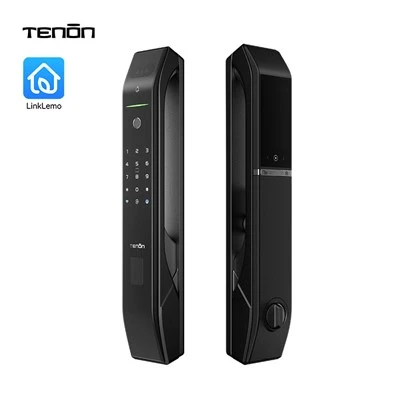
I don’t want to pressure anyone, but if you’re in the market for a new entry door, it’s worth comparing both options closely. A lot of suppliers will push steel because it’s cheaper to make, but don’t just go for the “traditional” choice— ask about the actual security ratings, the internal cores, and the smart features. We’ve put a lot of work into making our aluminium smart doors not just stylish, but secure, and we back that up with a 10-year warranty on the structural integrity and a 5-year warranty on the smart features.
Fingerprint Door Lock If you’re ready to chat about your specific needs— whether it’s for a home, a small business, or a retail space— we can walk you through different models, show you test results, and even help you figure out what features make the most sense for your property. No sales pitches, no pressure, just honest advice. We’ve helped hundreds of customers upgrade their security, and we’d love to help you too.
References
- U.S. Department of Energy. (2021). Residential Door Security Performance Testing. Office of Building Technologies.
- International Code Council. (2022). Fire Resistance Ratings for Architectural Doors. ICC Publications.
- Aluminum Association. (2020). Corrosion Resistance of Architectural Aluminum Components. Aluminum Association Technical Report.
- National Institute of Justice. (2019). Forced Entry Resistance of Smart and Traditional Entry Systems. NIJ Journal.
- Steel Door Institute. (2021). Performance Standards for Hollow Metal Doors. Steel Door Institute.
Guangdong Ap Tenon Sci. & Tech. Co., Ltd.
Guangdong Ap Tenon Sci. & Tech. Co., Ltd. is one of the most professional aluminium smart doors manufacturers and suppliers in China. With abundant experience, we warmly welcome you to wholesale advanced aluminium smart doors made in China here from our factory. Also, OEM service is available.
Address: No.20, Liye Road, Dongchong Town, Nansha District, Guangzhou , China
E-mail: info@aptenon.com
WebSite: https://www.tenondoorlock.com/
