Do TREP French Spring Washers Have a Safety Factor?
As a supplier of TREP French Spring Washers, I often encounter inquiries from customers regarding the safety factor of these washers. This is a crucial question, as the safety factor directly impacts the reliability and performance of the washers in various applications. In this blog, I will delve into the concept of the safety factor of TREP French Spring Washers, exploring its significance, how it is determined, and its real – world implications. TREP French Spring Washers

Understanding the Safety Factor
The safety factor is a fundamental concept in engineering and manufacturing. It represents the ratio of the maximum load a component can withstand to the actual load it is expected to carry during normal operation. A higher safety factor implies that the component has a greater margin of safety, reducing the risk of failure under unexpected or extreme conditions.
For TREP French Spring Washers, the safety factor is of utmost importance. These washers are designed to provide a pre – load or tension in a bolted joint, ensuring that the joint remains secure and stable. In applications such as automotive, aerospace, and industrial machinery, a failure of the spring washer could lead to catastrophic consequences, including equipment malfunction, structural damage, and even endangerment of human lives.
Determining the Safety Factor of TREP French Spring Washers
The safety factor of TREP French Spring Washers is determined through a combination of theoretical calculations and practical testing.
Theoretical Calculations
The theoretical calculation of the safety factor involves analyzing the material properties of the washer, such as its yield strength, ultimate strength, and modulus of elasticity. These properties are used to estimate the maximum load the washer can withstand before reaching its yield point or failing.
For example, the yield strength of the material is a critical parameter. If the washer is made of a high – strength steel, it will have a higher yield strength compared to a lower – grade material. The theoretical maximum load that the washer can carry is calculated based on the cross – sectional area of the washer and the yield strength of the material.
The actual load that the washer is expected to carry is determined by the application requirements. This includes factors such as the magnitude of the bolt pre – load, the vibration and shock loads that the joint will be subjected to, and the environmental conditions.
The safety factor is then calculated as the ratio of the theoretical maximum load to the actual load. A common safety factor for TREP French Spring Washers in most applications ranges from 1.5 to 3, depending on the specific requirements of the application.
Practical Testing
In addition to theoretical calculations, practical testing is also essential to determine the safety factor of TREP French Spring Washers. Testing is typically carried out in a laboratory environment using specialized equipment.
One of the most common tests is the compression test. In this test, the washer is placed between two flat plates, and a gradually increasing load is applied until the washer reaches its maximum compression. The load at which the washer starts to deform plastically or fails is recorded.
Another important test is the fatigue test. TREP French Spring Washers are often subjected to cyclic loading in real – world applications. The fatigue test simulates these cyclic loads to determine the number of cycles the washer can withstand before failure.
The results of these tests are used to validate the theoretical calculations and to ensure that the safety factor of the washers meets the required standards.
Real – World Implications of the Safety Factor
The safety factor of TREP French Spring Washers has significant real – world implications.
Reliability
A high safety factor ensures the reliability of the bolted joint. In applications where the joint is subjected to dynamic loads, such as in an engine or a moving machinery, a washer with a sufficient safety factor will be able to maintain the pre – load over a long period of time. This reduces the risk of the joint loosening, which could lead to equipment failure.
Durability
The safety factor also affects the durability of the washers. A washer with a higher safety factor is less likely to experience fatigue failure or permanent deformation. This means that the washer can be used for a longer time without replacement, reducing maintenance costs and downtime.
Safety
In safety – critical applications, such as in the aerospace and automotive industries, the safety factor of TREP French Spring Washers is crucial. A failure of the washer could lead to serious accidents, so a high safety factor is necessary to ensure the safety of the system.
Factors Affecting the Safety Factor
Several factors can affect the safety factor of TREP French Spring Washers.
Material Quality
The quality of the material used to manufacture the washers is a major factor. High – quality materials with consistent properties will have a higher yield strength and better fatigue resistance, resulting in a higher safety factor.
Manufacturing Process
The manufacturing process also plays a significant role. Precise manufacturing techniques, such as cold forging and heat treatment, can ensure that the washers have the desired dimensions and mechanical properties. Any deviations in the manufacturing process can reduce the safety factor of the washers.
Application Conditions
The application conditions, such as the temperature, humidity, and the presence of corrosive substances, can also affect the safety factor. For example, in a high – temperature environment, the material properties of the washer may change, reducing its strength and safety factor.
Conclusion
In conclusion, TREP French Spring Washers do have a safety factor, and it is a critical aspect of their design and performance. The safety factor is determined through a combination of theoretical calculations and practical testing, and it has significant real – world implications for reliability, durability, and safety.
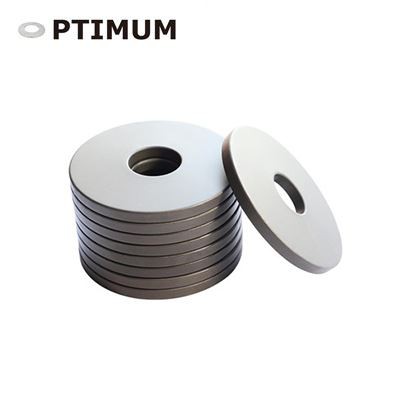
As a supplier of TREP French Spring Washers, we are committed to providing high – quality washers with a sufficient safety factor. We use the latest manufacturing techniques and high – quality materials to ensure that our washers meet the strictest standards.
Serrated Safety Washer If you are in need of TREP French Spring Washers for your application, we invite you to contact us for further discussions. Our team of experts can help you select the right washers with the appropriate safety factor for your specific requirements. We look forward to working with you to ensure the success of your projects.
References
- Budynas, R. G., & Nisbett, J. K. (2011). Shigley’s Mechanical Engineering Design. McGraw – Hill.
- Machinery’s Handbook (30th Edition). Industrial Press.
Yangzhou Optimum Spring Manufacturing Co., Ltd.
As one of the most professional trep french spring washers manufacturers and suppliers in China, we’re featured by quality products and good service. Please rest assured to buy customized trep french spring washers made in China here from our factory. For more information, contact us now.
Address: No.9 West of Shuangtang Rd, Yangzhou, P.R. China 225000
E-mail: susie@optimum-spring.com
WebSite: https://www.optimum-spring.com/
