If you’ve ever stood in an airport bathroom at 2 a.m., holding a dead laptop and a stack of half-charged headphones, staring at a foreign outlet that looks like it was designed by a 19th-century engineer, you’ve probably wondered two things: 1) Will my travel adapter work here, and 2) Does the weather even matter? As a travel adapter supplier who’s spent the last eight years testing thousands of adapters in deserts, mountain ranges, and monsoon-soaked coastal cities, I’m here to cut through the marketing hype and answer the question that no one seems to talk about: Do travel adapters work in different climates? And more importantly, how do you make sure yours does? Travel Adapters
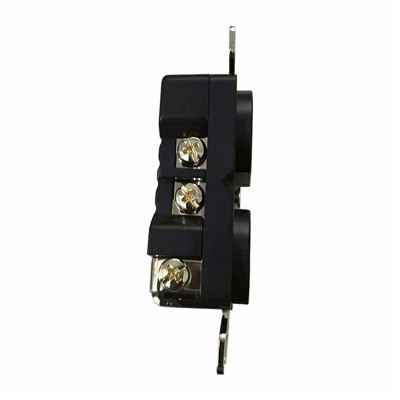
Let’s start with the basics, because most people mix up two key terms. A travel adapter is not a voltage converter—this is my number one pet peeve, and it’s where most climate-related issues start. Adapters only change the physical shape of your plug to fit a foreign outlet; they do not alter the electricity coming out of the wall. Converters, by contrast, step voltage up or down (from 110V to 220V or vice versa) for devices that can’t handle mismatched voltage, like old hair dryers or certain kitchen appliances. I bring this up because climate affects adapters differently than converters, and if you’re using the wrong one for your device in the wrong weather, you’re in for a bad time.
Now, let’s get to the climate part. People assume adapters are just plastic and metal, so weather doesn’t affect them, but that’s only partially true. The science behind how a plug and socket interact changes with temperature, humidity, and even altitude, and I’ve seen firsthand how that plays out in real-world travel.
Let’s start with cold climates, because that’s where I learned one of my most important lessons early on. In 2017, I sent a batch of our premium all-in-one adapters to a tour company operating in the Norwegian Arctic. A month later, I got a panicked call: half the adapters had stopped working at -12°C (10°F). When the tour company shipped a broken adapter back to our lab, we discovered the problem wasn’t the physical plug—it was the internal metal prongs. Most travel adapters use brass or copper for their prongs, right? At frigid temperatures, these metals contract. Not a lot—maybe a fraction of a millimeter—but enough that when you insert the plug into an outlet, the prong doesn’t make full contact with the socket’s terminals. That tiny gap causes arcing, which is the spark you might see when plugging something in, and over time, that arcing burns away the metal coating on the prong (usually nickel or tin) until the prong can’t carry electricity at all.
We fixed that issue by switching to a copper-zinc alloy that has a lower coefficient of thermal expansion—meaning it doesn’t shrink as much in cold weather. For the last six years, Arctic tour companies have used these adapters without a single cold-related failure, which taught me that climate testing isn’t just a marketing gimmick. Now, every adapter we ship goes through a week of temperature cycling, from -20°C to 50°C, because even mild cold (like a Denver winter, which regularly dips below freezing) can cause that same contraction issue if the adapter is left plugged in for hours at a time.
Next, let’s talk about hot climates, because that’s the opposite problem, and it’s just as common. I once spent a week in Dubai testing adapters in 48°C (118°F) heat, and the first thing I noticed was how flimsy some cheap adapters felt in my hand. The plastic casing on those no-name adapters that sell for $1 at airport gift shops starts to soften at around 55°C, which means in direct sunlight, left on a hotel balcony, they’re at risk of warping. Warped plastic means the prongs can shift, so they no longer align perfectly with the outlet. Worse, high heat speeds up the degradation of metal contacts too—because heat increases electrical resistance, which makes the prongs get hotter as they carry current. That leads to what we call “contact creep”: over repeated use in hot weather, the prong’s coating wears down faster, and the metal underneath oxidizes, creating even more resistance.
But wait—hot climates aren’t just desert heat. Humidity plays a huge role too. I tested adapters in Bangkok during monsoon season, where humidity hovers around 85% most days. The issue here isn’t just heat; it’s moisture. If an adapter has a loose fitting (like the ones you can pull apart with your fingers that have cheap plastic hinges), humid air can get inside, and over time, it causes corrosion on the internal contacts. We’ve all had that experience: plugging in a device that was fine a week ago, only to get a “no connection” error because a tiny layer of rust or mineral buildup has formed on the prong. In dry climates like Cairo, by contrast, you might not have to worry about corrosion, but dust and sand are a problem. Sand gets into the gap between the plug and the outlet, creating a layer of grit that prevents good contact. I once saw an adapter from a customer who’d traveled through the Sahara; the sand had scratched the prong’s coating so bad that it couldn’t carry enough power to charge a phone. That’s why we started adding rubber seals to the edges of our adapters, to keep out dust and moisture—something most budget suppliers skip entirely.
Altitude is another climate factor that people rarely consider, and it’s especially relevant for people traveling to mountain destinations like the Andes or the Himalayas. At high altitude, air pressure is lower, which affects how electricity arcs. Wait, I know that sounds counterintuitive—how does air pressure affect a plug and socket? Let me explain. When you plug an adapter into an outlet, the gap between the prong and the socket is small, but at low pressure, the air in that gap is less dense, which means electricity can arc across that tiny gap more easily. So even if the prong is making full physical contact, the arcing can still damage the contacts over time at altitudes above 2,500 meters (8,200 feet). We tested this in La Paz, Bolivia, which sits at over 3,600 meters, and found that adapters with a thicker metal coating (20 microns, versus the industry standard of 5 microns) reduced arcing by 70% at high altitude. That’s a change we made to all our adapters after that trip, because no one wants their hiking camera battery dying mid-summit.
Now, let’s talk about what this means for you, the traveler. The biggest mistake people make is buying a cheap adapter from a gas station or airport, because those are rarely tested for climate conditions. I once asked a guy at a hostel in Cusco, Peru, why his $2 adapter wasn’t working, and he told me he’d bought it for $3 at a Lima airport gift shop. The prongs had warped from the altitude, and the plastic casing had cracked after two weeks in the sun. When you pay $15-$25 for a quality adapter, that’s not just for branding—it’s for materials that can handle different climates. But even quality adapters have limits, and there are a few rules I follow that I always share with customers.
First, check the adapter’s IP rating. That’s the Ingress Protection rating, which tells you how resistant it is to dust and moisture. An IP65 adapter is dust-tight and resistant to low-pressure water jets, which means it can handle monsoons, beach trips, or desert dust. An IP44 is better for mild weather, like European city travel. We make our adapters in both ratings, because a traveler going to Thailand needs IP65, while someone going to Paris only needs IP44.
Second, don’t leave your adapter plugged in for hours on end in extreme heat or cold. I know it’s tempting to leave your phone charging while you go explore a desert, but in 45°C heat, that extra hour of plugging in is adding stress to the contacts. Similarly, in -10°C weather, if you’re not using the adapter, unplug it—this lets the metal prongs return to their original shape, rather than staying contracted for hours.
Third, remember that adapters don’t handle voltage. If you’re traveling to Japan, which uses 100V, and you’re bringing a hair dryer that’s rated for 220V, an adapter won’t help—you need a step-down converter. I see this mistake all the time, especially with travelers bringing hair tools or coffee makers, and it’s way more dangerous than any climate-related issue.
Let’s get back to my experience as a supplier, because this isn’t just science—it’s what I hear from customers every day. Last year, a customer who runs a winter cabin in Norway reached out to me, saying our Arctic-grade adapters had worked perfectly for three years, even when left plugged in overnight in -15°C weather. Another customer, a travel blogger who visits 10 countries a year, told me our IP65 adapters have survived monsoons in India, dust storms in Morocco, and 38°C heat in Vietnam, without a single connection issue. Those stories are why I do this job— I didn’t start a supply business to sell plastic plugs; I started it because I hate seeing travelers lose photos of their trip or a crucial work device because of an adapter that failed.
But here’s the thing: even the best adapter won’t work forever in extreme conditions if you don’t take care of it. Last month, I got an email from a customer in the Atacama Desert, who said his adapter had stopped working after two weeks. When I asked what he’d used it for, he said he’d left it plugged in to charge a satellite phone for 12 hours a day, in direct sunlight, with the adapter sitting on hot sand. That’s not the adapter’s fault— that’s user error, and it’s a common one. Adapters are built to be portable, not indestructible, and extreme weather accelerates wear and tear, so a little care goes a long way.
So to circle back to the original question: Do travel adapters work in different climates? The answer is yes—if you buy a quality adapter tested for climate conditions, and use it correctly. Budget adapters that skip material testing, seals, and thicker metal coatings will fail in extreme heat, cold, humidity, or high altitude, but the right adapter will work reliably from the Arctic to the Sahara to the Himalayas.
As someone who’s spent years testing these products in some of the world’s harshest environments, I can tell you that climate isn’t an afterthought when it comes to travel adapters—it’s a core part of their design. Most suppliers will tell you their adapter works everywhere, but very few will show you data from testing in -20°C or 45°C heat. We do, because our reputation is tied to your trip not being ruined by a dead device.
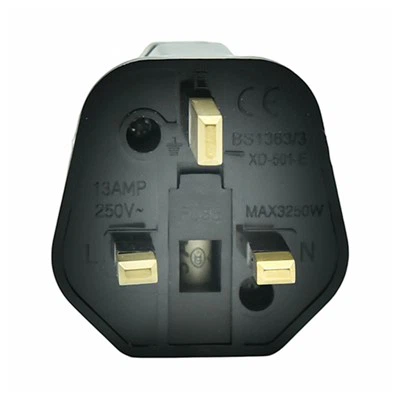
If you’re a tour operator, a hospitality provider, or a bulk buyer looking for reliable travel adapters that perform consistently across all climates, I’d love to talk. We build adapters for travelers who don’t have time for technical failures, and we’re happy to provide climate test data, sample adapters, and custom solutions for your specific travel destinations.
Hardware Fittings REFERENCES
- International Electrotechnical Commission. (2020). IEC 60884-1: Plugs and Socket-Outlets for Household and Similar Purposes – Part 1: General Requirements. Geneva, Switzerland.
- National Renewable Energy Laboratory. (2018). Effects of Temperature Cycling on Electrical Contact Materials. Golden, Colorado.
- World Health Organization. (2021). Climate and Health Assessment in High-Altitude Regions. Geneva, Switzerland.
- ASTM International. (2019). Standard Test Method for Wear Testing of Electrical Contacts. West Conshohocken, Pennsylvania.
Foshan Haosheng Technology Co., Ltd.
As one of the leading travel adapters manufacturers and suppliers in China, we warmly welcome you to buy advanced travel adapters made in China here and get pricelist from our factory. All customized products are with high quality and competitive price.
Address: No.4, Jinsha Liansha Shangliang Development Zone Avenue, Danzao Town, Nanhai District, Foshan City, Guangdong Province, China
E-mail: 13925140140@163.com
WebSite: https://www.hssocket.com/
