If you’ve ever shopped for insulation boards, you’ve probably stumbled over a surprisingly common question: are specific thickness insulation boards waterproof? As a supplier who’s spent 12 years matching boards to home renovation, commercial construction, and industrial retrofit projects, I can tell you this isn’t a yes-or-no question. A lot of homeowners and contractors assume thicker equals more water resistance, or that all insulation boards hold the same properties—both are myths. Let’s break this down with the kind of real-world insight I’ve gained from answering calls, visiting job sites, and walking through lab tests with our product team. Specific Thickness Insulation Boards

First, let’s clarify what “waterproof” actually means for insulation. In construction terms, waterproofing is the ability to repel liquid water entirely, so no moisture can seep through the board. What most people mix up, though, is water resistance— the ability to slow down or resist moisture vapor and liquid, but not fully block it. That’s a critical distinction, because insulation boards labeled for exterior use, basements, or crawl spaces are almost always water resistant, not fully waterproof. Where thickness comes into play is in that resistance, not the core ability to block liquid.
Let’s use the specific products we supply as examples, because numbers make this concrete. We offer 1-inch, 2-inch, 3-inch, and 4-inch rigid insulation boards, all made from expanded polystyrene (EPS), extruded polystyrene (XPS), and polyisocyanurate (polyiso) — three of the most common rigid board insulation types, each with different properties.
Take XPS, our thickest board line, which is made by heating polystyrene beads and forcing them through a die to create a dense, closed-cell structure. Our 2-inch, 3-inch, and 4-inch XPS boards have a water absorption rate of less than 0.2% by volume after 24 hours of immersion, per ASTM C518 standards for thermal conductivity and moisture resistance. The 1-inch XPS has a slightly higher absorption rate, around 0.3%, because it’s a thinner board with fewer closed cells to hold back moisture. That’s not to say the 1-inch is “bad” — it’s still suitable for above-ground walls, attic floors, and interior partitions where it won’t be exposed to direct water. But if you’re using it for a below-grade foundation wall or a patio roof where splashing is possible, the thicker XPS boards hold up far better.
Polyiso is another big one we supply, especially for commercial projects. Our 1.5-inch, 2.5-inch, and 3.5-inch polyiso boards (custom thicknesses are our specialty) have a bonded facer that adds an extra layer of moisture protection. The facer is usually a fiberglass-reinforced foil, which acts as a secondary barrier against liquid water. Thicker polyiso here doesn’t mean the core is more waterproof, though — the facer is what blocks moisture. A 1-inch polyiso without that bonded facer would have a core absorption rate close to EPS, but our thicker polyiso lines all come standard with the facer, so their water resistance is consistent across thicknesses. That’s a key point: some insulation’s water protection comes from additives in the material, not thickness itself.
EPS, the most affordable rigid board we supply, is often misunderstood as not being moisture resistant at all, which isn’t true. Our 1-inch, 2-inch, and 3-inch EPS boards have a water absorption rate between 1% and 2% after 24 hours, again per ASTM standards. The thicker EPS (3-inch) is slightly lower, around 1.2%, because the longer, closed-cell structure slows water wicking. This makes EPS a great choice for unconditioned spaces like attics, where it’s not exposed to standing water, but it’s not rated for direct immersion. If you needed a board that can handle being submerged for weeks, none of our standard products are fully waterproof—we do, however, work with manufacturers to produce custom coated insulation boards for marine applications, foundation drainage mats, and other projects where full waterproofing is required, regardless of thickness.
Now, let’s talk about the common mistakes I see contractors and homeowners make when choosing thickness for moisture-prone spaces. Last year, I spoke to a homeowner who installed 1-inch EPS in his basement walls, only to have a pipe leak and leave the insulation soggy, moldy, and ineffective. He’d assumed thicker would be better, but he picked the wrong material: the 1-inch EPS was never designed for below-grade use, even if it was thicker than he needed for his upstairs walls. Conversely, another customer a few months back was putting a flat roof addition on her garage. She bought 2-inch polyiso, which is the right thickness for thermal performance, and because it had the foil facer, it handled occasional rain splash perfectly. The facer, not the thickness, was the reason it worked.
Another myth: thicker insulation always stays drier. Let’s test that logic with a job site example. A contractor I work with recently installed 4-inch XPS under a concrete slab for a retail store. Six months later, a heavy rainstorm caused surface water to seep into the slab’s edges, and the edges of the insulation board got wet. The center of the board, which was under the slab where moisture couldn’t penetrate, was still completely dry. The thick board had more mass, so the wet edges didn’t affect the thermal performance as much as they would a thinner board, but they weren’t waterproof. A 2-inch XPS board installed in the same spot would have had the same core moisture resistance, just less mass to hold back the splash.
So, what does that mean for you when you’re ordering specific thickness insulation boards? First, define your space: is it exposed to direct liquid water (foundations, roofs, marine structures) or just high humidity and occasional moisture (attics, interior walls, crawl spaces near dirt)? For high-moisture areas, you want insulation with a closed-cell structure or a bonded facer, not just thicker. Second, ask for moisture ratings: any reputable supplier will have test data that shows water absorption rates for each thickness and material. For example, our 3-inch XPS has a lower absorption rate than our 1-inch XPS, so it’s the better choice for foundation walls, but our 2.5-inch polyiso is just as water resistant, with a higher R-value per inch, so it’s better for flat roofs where space is limited.
There are a few edge cases where thickness does play a role in waterproofing, though. If you’re installing insulation as a drainage mat—meaning water is supposed to run off the board, not through it—thicker boards create more gaps between the board and the surface behind it, which helps water flow away instead of pooling. That’s a big one for retaining walls, where insulation is installed behind the wall to prevent heat loss, and the thickness creates the drainage space. A 4-inch insulation board will give more drainage than a 1-inch, so it’s better for these applications, even if both have the same water absorption rate. If water does seep through the wall, the thicker board’s space lets it drain away instead of sitting against the insulation and rotting it.
I get calls every week from people who say, “I need a board that’s completely waterproof, so which thickness do I buy?” The answer is: thickness doesn’t make insulation waterproof, but the right material and the right thickness for your space will give you the moisture resistance you need. If you do need full waterproofing, we offer custom insulation boards coated with a modified asphalt or polyethylene film, which are fully waterproof, and we can tailor the thickness from 1 inch to 6 inches to fit your project. These are for specialized applications, though—most residential and commercial projects don’t need fully waterproof insulation, just the right level of resistance.
Let’s also address a common concern: mold. A lot of people think water resistant insulation will get moldy, but that’s not true. If water absorption is below 1% by volume, mold growth is very rare, as long as the insulation can dry out. Our XPS and polyiso boards meet that threshold, even their thinnest and thickest versions. The only time mold becomes an issue is if insulation stays wet for extended periods—something that’s far more likely with thinner, porous materials like open-cell spray foam, or with insulation installed in areas with no drainage. For example, a 1-inch open-cell foam board has a water absorption rate of around 5%, which is high enough to support mold if it’s exposed to standing water, but a 3-inch XPS will not, even if it’s damp.
I’ve seen a lot of projects go wrong because someone chose the wrong thickness or wrong material for their moisture needs. A few years ago, a construction company hired us to supply 2-inch EPS for a school’s exterior walls. The EPS was cheaper than XPS, and they thought the 2-inch thickness would be enough. But after a winter with heavy snow, ice dams formed on the roof, and melted water seeped down the walls. The EPS absorbed moisture, shrank by 10%, and left gaps where air and water could get in. If they’d gone with 2-inch XPS instead, or even 1.5-inch polyiso, they’d have had the moisture resistance to handle the snowmelt, and the thickness would have been sufficient for the thermal performance. That’s the kind of mistake that costs time and money, which is why we make it a point to ask about your specific project details before you order—we don’t just sell boards, we help you pick the right one.
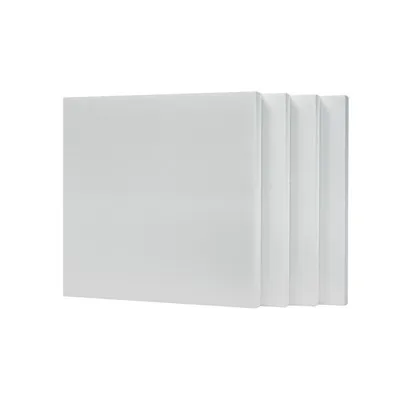
At the end of the day, the question “are specific thickness insulation boards waterproof?” doesn’t have a one-size-fits-all answer. Thickness affects how much moisture a board can resist, and in some cases, how well it can drain water away, but the material and any added facers or coatings are what determine if a board is truly waterproof. If you’re planning a project and you need to make sure your insulation stands up to moisture, we’d love to walk through your needs with you. Whether you’re working on a basement renovation, a flat roof addition, a retaining wall, or something else entirely, we can recommend the right material and thickness to fit your budget and performance requirements. Don’t guess on your insulation—reach out to us, and we’ll help you get it right.
Fire Retardant Insulation Board Reference:
ASTM C518, Standard Test Method for Steady-State Thermal Transmission Properties by Means of the Heat Flow Meter Apparatus
ASTM C1763, Standard Test Method for Water Absorption of Rigid Cellular Plastics by Immersion
National Building Code of Canada, Section 9.25 for Moisture Resistance of Building Insulation
US Department of Energy, “Insulation for Water-Prone Areas” – Office of Energy Efficiency and Renewable Energy
Wenzhou Lejia Energy-saving Material Co., Ltd.
As one of the leading manufacturers and suppliers of specific thickness insulation boards in China, we’re featured by quality products and good service. Please rest assured to buy advanced specific thickness insulation boards for sale here from our factory. We also accept customized orders.
Address: Block A, No. 128 Changxiu Road, Lingkun Subdistrict, Wenzhou Marine Economy Development Demonstration Zone, Zhejiang Province, China.
E-mail: luckyfoam@vip.163.com
WebSite: https://www.lfxps.com/
